
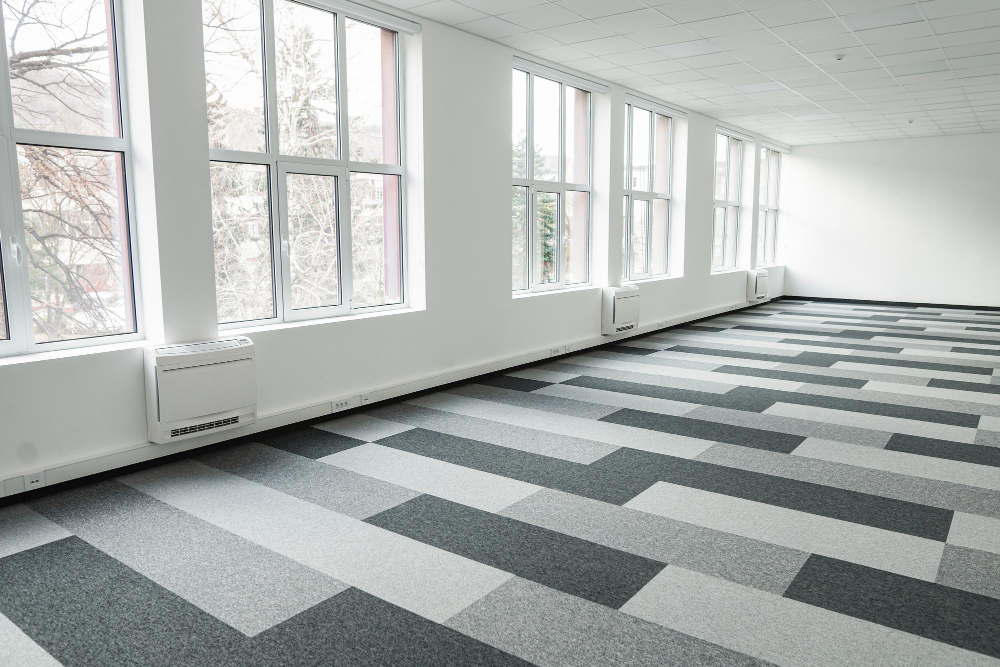
The demand for carpet tiles and soft flooring is steadily increasing across office and hospitality segments, driven by performance, lifecycle cost, and design flexibility. For flooring professionals, floor carpet tiles are no longer just an aesthetic choice—they are a strategic solution within commercial flooring projects.
Market Shift Towards Modular Flooring
One of the key industry shifts is the move from broadloom carpets to carpet tiles. The modular nature of floor carpet tiles allows faster installation, phased execution, and minimal operational disruption; critical for offices, hotels, and co-working spaces.
From a project execution standpoint, commercial flooring services benefit from reduced installation time, lower wastage, and simplified logistics. This makes soft flooring a preferred option in renovation as well as new-build commercial projects.
Performance & Maintenance Advantages
For high-traffic environments, carpet tiles offer clear operational benefits. Individual tile replacement reduces maintenance costs and downtime. Compared to traditional flooring, floor carpet tiles provide better wear management, especially in zones like corridors, lobbies, and workstations.
Soft flooring also enhances acoustic control; an important parameter in office layouts and hospitality interiors. This performance aspect is increasingly influencing commercial flooring specifications, especially in premium projects.
Design Standardization & Customization
From a specification perspective, carpet tiles enable both standardization and creative flexibility. Manufacturers now offer coordinated collections that help maintain uniformity across large commercial spaces while allowing zone-wise customization.
For commercial flooring services, this means easier planning and execution. Floor carpet tiles can be used to create functional zoning—such as circulation paths, collaborative areas, or guest interaction spaces—without major structural changes.
Sustainability & Lifecycle Value
Sustainability is becoming a key decision factor in commercial flooring. Many carpet tiles are manufactured with recyclable materials and low-VOC emissions. The ability to replace only damaged floor carpet tiles reduces overall material consumption and supports green building certifications.
From a cost perspective, soft flooring solutions provide better lifecycle value. Lower maintenance, easy replacement, and long-term durability make them a viable option for large-scale commercial installations.
Looking ahead, carpet tiles and soft flooring will continue to dominate segments where flexibility, speed, and performance are critical. For contractors, architects, and developers, partnering with experienced commercial flooring services providers will be key to delivering efficient and scalable solutions.
In summary, floor carpet tiles are redefining execution standards in commercial flooring—offering a balance of performance, cost-efficiency, and design adaptability tailored to industry needs.